
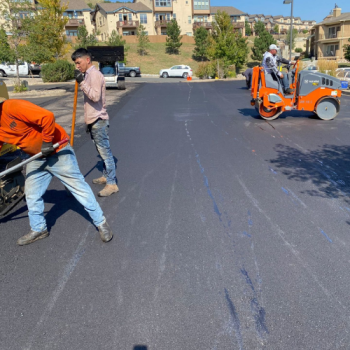
If you manage a commercial property in Colorado Springs, you already know the pattern. A pothole shows up in the drive lane after a cold snap. Somebody throws some patch material in it. Three weeks later it is back, bigger than before, and now a tenant is asking why nobody has fixed it.
Potholes are not random, and they are not just a cosmetic problem. They are a symptom. Understanding what is actually happening under the surface is the difference between paying for the same repair every winter and paying for it once. This guide walks through why potholes form on Pikes Peak region parking lots, which repair methods last and which ones do not, and how to build a simple plan so you stop chasing the same holes year after year.
Why Colorado Springs Parking Lots Grow Potholes
Asphalt does not fail because it gets old. It fails because water gets in. Every pothole starts with a crack, a worn seam, or a low spot that lets moisture slip past the surface and into the layers below.
Colorado Springs is especially hard on pavement because of how our weather behaves. We get bright, sunny days in the 50s followed by nights well below freezing, and that swing can happen over and over in a single week. Water that has seeped into a crack freezes overnight and expands. When it thaws, it leaves a small void behind. Traffic rolls over that weak spot, the surface breaks, and the void gets bigger. Repeat that cycle through a few winters and you get a hole.
Add in the other things our parking lots deal with and the problem compounds. Snow plows scrape edges and lift loose pieces. Ice melt chemicals can soften and break down the asphalt binder over time. Heavy delivery trucks and trash haulers put far more stress on a drive lane than passenger cars do. And Front Range hail and summer heat cook the surface until it gets brittle and starts to ravel.
What a Pothole Actually Is
It helps to picture the pavement as a layered system. At the top is the asphalt surface, usually a few inches thick on a commercial lot. Under it is the base, typically compacted gravel, and under that is the soil. The surface layer carries the wear. The base carries the load.
A pothole forms when water weakens the base or the bottom of the asphalt, and the surface above it loses its support. The hole you see is often much smaller than the damaged area underneath. That is why a pothole that looks like a six inch problem can turn out to be a four foot problem once the loose material is cut away.
This is also why potholes tend to show up in clusters and in familiar places: low spots where water collects, along curb lines, near catch basins, at the edges of old patches, and anywhere that cracks were never sealed. If you keep patching the same corner, the corner is telling you something about drainage or base condition that the patch is not addressing.
Four Ways to Repair a Pothole, Ranked by How Long They Last
Not all pothole repairs are the same, and the price difference between them usually tracks the lifespan. Here is how the common methods compare.
1. Throw and Go
This is the fastest and cheapest option. Cold patch material is shoveled into the hole, tamped down with a truck tire or a hand tamper, and the crew moves on. It is a legitimate emergency fix that removes the hazard in almost any weather.
The downside is durability. The hole is usually wet or full of debris, the edges are ragged, and the material is not compacted well. Expect it to last weeks or a few months, and expect to see it again in the next freeze. Treat it as a stopgap, not a repair.
2. Cold Patch With Proper Prep
A step up from throw and go. The crew clears loose material and water out of the hole, squares the edges, fills in layers, and compacts each lift with a plate compactor or roller. Done carefully, this holds noticeably better and is a good winter option when hot mix is not practical.
It still will not match a hot mix repair, but it can carry a lot through the cold months and give you a clean surface to build on in spring.
3. Saw Cut and Hot Mix Patch
This is the repair most commercial properties should aim for. The crew saw cuts a clean rectangle around the damaged area, extending past the visible failure into solid pavement. The old material is removed, the base is checked and recompacted, a tack coat is applied to help the new asphalt bond, and fresh hot mix is placed and compacted flush with the surrounding surface. The seams are then sealed so water cannot sneak in along the edge.
Square edges and a bonded, compacted patch are what make this method last. Hot mix repairs done this way can perform for years, and they are far less likely to peel or pop out under plow blades and truck traffic.
4. Full Depth Repair
When the base itself has failed, surface patching will never hold. Full depth repair means removing the asphalt and the damaged base material, rebuilding the base with fresh compacted aggregate, and then paving back over it. It costs more up front, but it is the only repair that solves a base failure rather than covering it up.
If you have an area that keeps failing despite repeated patching, a full depth repair on that zone is often the smartest money you can spend. It stops the cycle.
Why Winter Patches Fail (and What to Do About It)
Most potholes show up between late fall and early spring, which is also when it is hardest to repair them properly. Cold, wet conditions make it tough to get a good bond. Hot mix is often harder to source in the coldest months, and asphalt needs warmth to compact correctly.
The practical answer is to think of winter repairs and spring repairs as two different jobs. In winter, the goal is safety and damage control: fill the hole with the best cold patch method available so nobody blows a tire or turns an ankle. In spring, once pavement is dry and temperatures are steady, go back and do the permanent repairs. Cut out the temporary patches that did not hold, fix the drainage and base issues you uncovered, and seal the surrounding cracks.
Property owners who skip the second step end up paying for winter patches again and again. Those who build the spring follow up into their budget usually find the total cost drops over a few years, because the repairs actually last.
Fix the Cause, Not Just the Hole
A durable pothole repair starts with asking why the pothole formed. A few of the usual culprits are worth checking before anyone fires up a hot mix truck.
Drainage is the biggest one. If water pools in a section of your lot after rain or snowmelt, that area will fail again no matter how well it is patched. Sometimes the answer is regrading, sometimes it is clearing a clogged drain, and sometimes it is adjusting how snow gets piled and where the melt runs.
Unsealed cracks are the next one. Cracks are the front door for water. Filling or sealing them early is far cheaper than repairing the potholes they eventually cause. If your lot has a network of open cracks, a crack sealing and sealcoating program is one of the best defenses you have.
Base failure shows up as alligator cracking, a pattern of interlocking cracks that looks like reptile skin, along with sagging or soft spots. If you see it, patching the pothole is not enough, and you should have the area evaluated for a full depth repair or resurfacing.
Finally, there is traffic. Dumpster pads, loading docks, and drive lanes used by heavy trucks fail faster than parking stalls. If a failure is in a heavy use zone, the repair spec should reflect that load.
When Potholes Mean It Is Time to Resurface
A handful of potholes in a lot that is otherwise in decent shape is a repair job. But potholes can also be an early warning that the pavement as a whole is reaching the end of its service life.
Here are signs that you are past the point of patching your way out:
- Potholes are showing up in many areas of the lot, not just one or two.
- Repaired spots are failing again within a season or two.
- Large sections have alligator cracking or visible rutting.
- The surface is badly oxidized, gray, and crumbling at the edges.
- You are spending more each year on patching than you would on a planned fix.
In that case, parking lot resurfacing or a larger section replacement may deliver far better value. We cover how to make that call in our guide to when to repair, resurface, or replace commercial asphalt, and the pricing side is covered in what it costs to pave a parking lot in Colorado Springs.
The Real Cost of Leaving a Pothole Alone
It is tempting to put off a repair when the budget is tight. The trouble is that potholes get more expensive the longer they sit. Water keeps working on the base, the damaged area grows, and what could have been a small patch turns into a larger cut and fill.
There is also the risk side. Vehicle damage claims, tripping hazards for pedestrians, and the impression a rough lot leaves on customers are all real costs. Your pavement is usually the first thing people see when they arrive. A clean, well kept lot tells them the property is looked after. A lot with potholes and faded markings tells them the opposite. If you are already planning repairs, it is a good time to look at restriping as well, since fresh paint over fresh patches makes the whole lot look sharper, and our post on striping and ADA compliance explains what to watch for.
A Simple Pothole Plan for Property Managers
You do not need a complicated system. A routine that fits into your normal property walk is enough to catch most problems early.
Walk the lot in late fall, before the hard freezes, and mark every open crack and low spot. Seal what you can while temperatures are still workable. Walk it again in late winter or early spring when potholes tend to show up, take photos, and note locations on a simple map. Use cold patch to handle anything that is a hazard right now. Then schedule your permanent repairs for the first stretch of dry, mild weather in spring and bundle them into one mobilization instead of calling a crew out for every hole.
If the same spot shows up on your map two years running, that is your sign to dig deeper than the surface.
What to Ask Before You Hire Someone to Fix Potholes
Pothole repair looks simple, which is why quality varies so much. A few questions help you tell a real repair from a quick patch.
Ask whether they saw cut the edges or just fill the hole. Ask how they prep and compact the patch, and whether they use a tack coat on hot mix repairs. Ask what they plan to do about the cause, whether that is drainage, cracking, or base failure. Ask what the repair is expected to last and what warranty or follow up they offer. And ask whether they will tell you plainly when a patch is not the right answer.
A good contractor will be glad you asked, and will tell you plainly when resurfacing or full depth repair makes more sense than patching.
Frequently Asked Questions
How long does a pothole repair last in Colorado Springs?
It depends on the method. A cold patch dropped into a wet hole might last a few weeks or a couple of months. A properly cut and compacted hot mix patch can last for years, often as long as the pavement around it. A full depth repair that fixes a failed base can last the remaining life of the lot.
Can you repair potholes in winter?
Yes, but with limits. Cold patch material can be placed any time of year and works as a temporary fix to keep the hazard under control. Permanent hot mix repairs are best done when the pavement is dry and temperatures are mild, and hot mix is often harder to source in the coldest months. Most property owners patch in winter to stay safe and schedule permanent repairs in spring.
Why do potholes keep coming back in the same spot?
Usually because the real problem was never fixed. Water is getting into the base through cracks or poor drainage, or the base itself has failed. If a repair only fills the hole at the surface, the same weakness is still underneath and the pothole returns.
Is a pothole a sign I need to replace my whole parking lot?
Not by itself. A few isolated potholes in an otherwise sound lot are a repair job. Widespread potholes, alligator cracking across large areas, and repeated failures in the same zones are signs that the base is failing and resurfacing or replacement may be the smarter investment.
Who is responsible if a pothole damages a customer’s vehicle?
That depends on the property, the lease, and the circumstances, so it is worth talking with your attorney or insurance provider. What we can say is that documented, prompt repairs put a property owner in a much better position than a known hazard left unaddressed.
How fast can a pothole be fixed once I call?
Temporary patching can often be done quickly, sometimes within days depending on our schedule and the weather. Permanent repairs take a little more planning because the area needs to be cut, cleaned, filled, and compacted. Call us and we will tell you what is realistic for your property.
Get Your Parking Lot Back in Shape
If you have potholes now, or you want to get ahead of the next freeze, Pavco can walk your property, tell you what is a quick patch and what needs a real repair, and put together a plan that fits your budget. We have been working on Colorado Springs pavement for over 30 years, and we are happy to give you a straight answer even when that answer is “this one is fine for now.”
Take a look at our asphalt repair services or contact us to schedule an assessment. You can also call us at (719) 332-4111.